DAW: Garageband on iPad | Logic Pro
Design: tldraw | Figma
Hosting: Cloudflare | Digital Ocean | Netlify
Static sites: Pager | Hugo | Astro
UI Frameworks: Solid | React
Practically speaking, I have an immediate todo list ahead of me:
But this page is for answering “what am I about right now?”, listed in order from most recent to oldest.
I have a fondness for software as a communal act, as communication medium, as a global commons. Anything other than insularity of “personal software”, which leaves me cold. Groups as a design space is just so much more fertile — requires dealing with the nuances of collaboration tools, notifications, selection effects, shared environment design, etc.
I like Hypothesis’s annotation feature and Henry’s search system across Bluesky and Arena. I really like the idea of BeReal (especially Robin’s home-cooked version of it), even if I don’t partake.
Which is the problem of choosing what to say and deciding how to say it. Inseperable from the evergreen problem of making people care enough to listen to what you have to say.
Websites are perhaps the ultimate form to practice this, since they have multi-media capabilities, many screen sizes, and visitors with low attention spans. Magic Ink is my Bible here.
I’ve been looking for a word that means “thinking better” while being wayyy more broad than just the meagre act of thinking. I now think calibration is that word. Active practice often involves engaging with, and improving, other people’s models of things (e.g. my friend’s concept of practice). And occasionally, yelling at people who make it harder.
Many popular technologist lenses involve looking at things as a system, attempts at a physics of software, solving problems on a “fundamental” level, defining Lego pieces, etc. I believe these approaches help create good tools a layer below the end-user interface, but struggle above it.
Because where the software actually meets the user, behaviour is the thing that matters. All kinds of interesting problems exist here — one example of which is Interface Anxiety. But the larger vision is simply the careful consideration of people and what feel and do.
I like to joke about how I’m probably owed reparations from the Ink & Switch folks for colonizing a large part of my brain for the last 3 years. As a result of which I have built half a dozen sync engines (each buggy in their own way), and refused to make web apps with loading spinners.
I now know too many cursed facts about transaction isolation levels, SQLite limitations, query invalidation, the beauty of the log as data structure, etc. etc.
All the ways you can choose to build reactive interfaces (I prefer signals, btw), and it’s intersection with animations, async programming, etc. The tradeoffs of having a virtual DOM as a powerful control layer vs. the simplicity of “just update things”.
[TODO]
[TODO]
If any of these items overlap with your interests, and seem worth discussing, reach out to me at judah@joodaloop.com
From aidan: “wish we had a creative commons equivalent for privacy policies, instead of a wall of text it says this is a PC-3PAds-Arbitration site”
I like this idea because anybody can start doing this today. Make up a privacy license and add it to your site/product. If it’s a good one, other people might see it and borrow the name and terms.
This very page is a step towards what I want it to be, but it’s missing a bunch of stuff.
The Workshop and the Storefront
It felt like people were offering us display cabinets when we were looking for a sturdy workbench.
Christoph Labacher, Building a Design System Workbench
This makes more sense in AR, but I would like one in 2D too. Let me arrange folders on a canvas, with icons that open the folder in Finder when clicked on. Let me place things over or under other things, let me stack trash in a corner.
We need a Wordpress competitor that’s made for static sites.
Think about formats. Think about “posts”, and “collections”, and “updates”. Think about creative freedom and power alongside simplicity.
Needs to sync to a Git repo (or does it??), needs to provide live previews while editing, needs to add things like search, dynamic data, etc.
I’ve written about why I want one, and this is the exact design (and accompanying features) I have in mind:
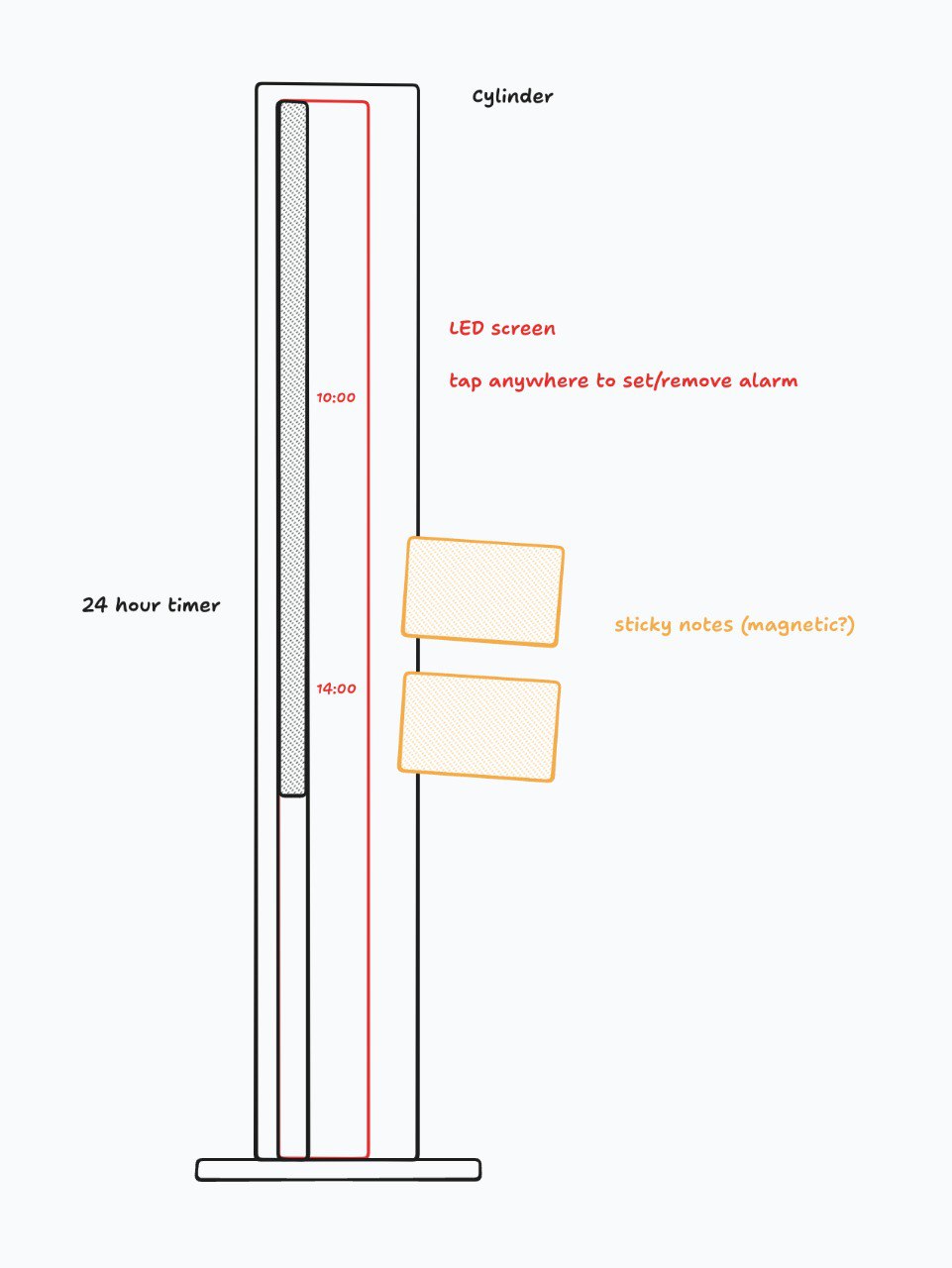
First step, run continuous backups of the browser history (since Chrome only stores 90 days worth). Then, do fun things like data viz, link re-surfacing, LLM-enabled recommendations, and whatever else you can think of.
I’m sure there are many reasons that this is a bad idea, but I want a service with the vibes of Tinyletter and pricing that isn’t a monthly subscription.
A real scenario: you want to move your newsletter off of Substack. It has a few hundred subscribers but you don’t want to pay $9/month for emails you only send out 4 times a year (sorry, we both know it’s true).
Gather the best reading lists, warning posts, useful snippets, field reports, etc. that currently live in the dark forest of Github’s gists pages.
Then organise them by niche and host them on a microsite.
Most developer tools have immense amounts of customisability; mostly because their user base are willing to go make their own tools if they find configuration options on existing ones to be inadequate. My editor of choice (Zed) has the ability to remove sidebars and toolbars from the app by editing a simple JSON file. Arc Boosts made it similarly easily to just “zap” parts of a webpage out of sight.
To me, this feels like the bare minimum of user-editable-ness, why shouldn’t every app allow users to hide or show UI elements (from panels to individual buttons) as desired?
Use accelerometers and motion sensors to get highly accurate positional data, and use it to record the paths a person has taken.
The hard part will probably be combining this with GPS to place it on an actual map.
Device/app that records a person humming a tune as input and transcribes it to any other instrument (eg piano, trumpet, 808) as a MIDI track. Should make sure to capture velocity + attack + release as accurately as possible from the hummed notes.
App Bloat leaderboard – A database of popular (pro/con)sumer apps and how high their memory usage and bundle size is.
Where Should I Host? – A comparison of compute and storage providers for the rest of us.
App reviews – Would be cool to make high-quality reviews of apps and games, that aren’t just some Techcrunch article.
List of %s of populations – From Visa: “i know ~10% of people are left-handed, what other things are 10% of the population? maybe redheadedness? nope, that’s something like 2% genpop. 17% of ppl have blue eyes”
Most apps involve dealing with sortable and filterable lists of data. Sometimes these lists need to be publically shareable, and are made available by the application on public web pages (e.g. a Twitter thread), or through an API (e.g. are.na’s API) for the more technically inclined.
I recommend making sure that these lists are also available as RSS feeds. For one, it’s an interesting design challenge to convert structured data into a prose entry. But more importantly, it makes them very easy to follow using existing tools.
I want a podcast which is just an entire conversation between smart people around “what does your model of [X] look like” for various values of X
Preserving the web is still an unsolved problem. You can’t trust the Internet Archive. Most pages are not Designed to Last
Every applications should have a “shelf” (name inspired by Ink and Switch) where users can dump text, images, and maybe even data specific to the app. Garageband is an example of an app that has a basic version of this: a simple plaintext notepad per song.
Universal solutions like clipboard history or Dropover are insufficient because they:
No other description, either you see the vision or you don’t.
You know what AI agent I would actually use?
Look through my bookmarks → navigate 1–2 layers through thread and links → embed everything for me to search
Minh Nhat Nguyen, tweeting
This is one place embeddings search might actually be useful because tweet-sized posts mean chunking is already done for you, and the dataset is not large enough to create too many confabulations.
A site where I can input a URL, and it uses the linked site’s sitemap.xml to draw an explorable map (like this one) of all it’s pages. Bonus points if you can separate it into “regions” based on topic, time, URL structure, etc.
This is not a complicated idea, but it has lots of fun design avenues to explore. Here’s one very simple example.